
What are the Signs of a Bad Alternator?
Quality recycled auto parts you can trust, backed by experience and dependable service.
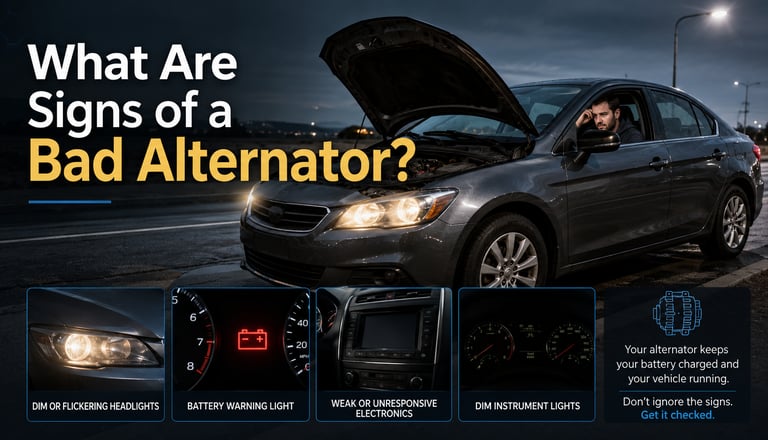
Your car might start up just fine in the morning, but then act oddly after you drive a few miles. Maybe the headlights get dim, the dashboard flashes a battery warning, or the radio and power windows seem weaker than normal. When this happens, many drivers wonder: What are the signs of a bad alternator?
Most people do not think about the alternator until there is a problem. It quietly does its job while the engine runs. But if it starts to fail, your car will usually give you some warning signs before it leaves you stranded.
At first, a bad alternator can seem like a battery problem, which can be confusing. You might replace the battery, but the same issue comes back after a few days. The real problem could be that the alternator is not charging the battery as it should.
Let’s go over the most common signs of a bad alternator, what they mean, and what steps you can take next.
What Does the Alternator Do?
Your alternator is part of your vehicle’s charging system. While the engine is running, the alternator produces electrical power for your car. It also keeps the battery charged, so the battery has enough power to start the vehicle the next time you turn the key or press the start button.
The battery starts your car, but the alternator keeps everything running once the engine is running.
The alternator helps power:
Headlights
Interior lights
Radio and infotainment system
Power windows
Heated seats
Climate control
Dashboard electronics
Ignition system
Engine sensors
Battery charging system
If the alternator weakens, your car starts drawing more power from the battery. This only works for a short time because the battery isn't meant to power everything on its own. Once it runs out, the car might stall or fail to start.
Common Signs of a Bad Alternator
Dimming or Flickering Headlights
A common sign of a bad alternator is dim or flickering headlights. You might see the lights get brighter when you press the gas and then dim again when the car is idling.
This hThis happens because the alternator might not be giving a steady flow of power. Headlights need a constant supply of electricity, so when the alternator output drops, the lights are often the first thing you notice. This is especially noticeable at night. You might pull up behind another vehicle at a stoplight and see your headlights fade slightly against the other vehicle's bumper. It is a small clue, but it may indicate a charging system problem.
Battery Warning Light on the Dashboard
A battery warning light does not always indicate a bad battery. In many cars, this light can indicate a problem with the charging system, which could involve the alternator, battery cables, belt, voltage regulator, or wiring.
The warning light may look like a small battery icon. In some vehicles, the dash may show a message such as “Check Charging System” or “Battery Not Charging.”
Do not ignore this warning light. Your car might keep running for a short time, but it could be running on battery power only. Once the battery is drained, the car could shut off.
Slow Starts or a Dead Battery
A bad alternator can also cause a battery to keep dying. The battery might test fine after charging, but it still loses power overnight or after a short drive.
This can be frustrating. Many people think the battery is the problem when the car will not start, which makes sense at first. But if the alternator is not charging the battery while you drive, even a good battery will run down.
If you have just put in a new battery and your car still has trouble starting, it is a good idea to have the alternator checked.
Electrical Problems While Driving: Modern cars rely heavily on electronics. If the alternator gets weak, you might notice strange electrical problems before the car actually stops working.
Common electrical symptoms include:
Power windows are moving slowly
Radio cutting in and out
Dashboard lights flickering
Heated seats are not working properly
The blower motor is slowing down
Infotainment screen restarting
Warning lights are appearing randomly
These problems might not seem connected at first. But if you notice several electrical issues happening together, it is time to check the alternator.
A good charging system gives your car’s electronics steady power. If the power gets unstable, things might flicker or act strangely, like house lights during a storm. A burning smell can also be a sign of alternator trouble. The smell may come from an overheated alternator, damaged wiring, or a slipping belt.
Sometimes it smells like hot rubber, and other times it smells like burning electrical parts. Either way, do not ignore it. If you notice a burning smell while driving, pull over safely and check. Do not touch any hot engine parts. If the smell is strong, the battery light is on, or you see smoke, get the car checked before driving any further. Grinding or Squealing Noise.
A failing alternator can make strange noises. You might hear whining, grinding, or squealing sounds coming from the front of the engine. The alternator has bearings inside that help it spin smoothly. If these wear out, you might hear grinding or growling noises. A loose or worn belt can also squeal if it slips on the alternator pulley.
Hearing noise by itself does not always mean the alternator is bad. Belts, pulleys, and tensioners can make similar sounds. But if you hear noise along with dim lights or charging warnings, the alternator is likely the problem.
Engine Stalling or Rough Running
In some cases, a weak alternator can make the engine run rough or even stall. This is because the engine requires electricity for ignition, fuel delivery, sensors, and the computer.
If the alternator cannot keep up, the engine might stumble, hesitate, or shut off. This is more serious than just a slow window or dim lights. At this stage, the car may not be safe to drive.
If your car stalls and the battery light is on, the charging system should be tested as soon as possible.
Bad Alternator vs. Bad Battery
A bad battery and a bad alternator can cause similar problems, so guessing can get expensive. If the issue is with starting the car, you might hear a clicking sound, slow cranking, or nothing at all when you turn the key. A bad alternator usually causes problems after the engine is running. You might notice dim lights, warning lights, electrical issues, or even stalling.
Here is a simple way to think about it:
If the car will not start, the battery may be weak.
If the car starts but loses power while driving, the alternator may be weak.
If a new battery keeps dying, the alternator may not be charging it.
The best way to know for sure is to test both. A battery test and a charging system test can usually tell you which part is causing the problem.
What Causes an Alternator to Fail?
Alternators do not last forever. Like other car parts, they wear out over time. Things like heat, mileage, age, and how much electricity your car uses can all affect them.
Common causes of alternator failure include:
Worn internal bearings
Failed voltage regulator
Damaged alternator belt
Loose or corroded battery cables
Overheated internal components
Oil or fluid leaks are dripping onto the alternator
High electrical demand from accessories
Normal wear from mileage and age
Often, the alternator just wears out after years of use. Sometimes another problem causes it to fail sooner. For example, if a valve cover gasket leaks oil onto the alternator, it can cause the alternator to fail prematurely.
How to Check for Alternator Problems
You do not need to be an expert to spot the signs of an alternator problem. Still, testing should be done carefully. Here are some steps you can take:
Watch the dashboard.
Look for a battery light, charging system warning, or unusual electrical messages.
Pay attention to the headlights.
If the headlights dim, flicker, or change brightness with engine speed, the charging system may be unstable.
Listen for unusual noises.
Whining, grinding, or squealing near the alternator can indicate a belt, pulley, or alternator issue.
Check the battery connections.
Loose or corroded battery terminals can mimic alternator problems. Make sure the connections are clean and tight.
Get a charging system test.
Most repair shops, parts stores, and service centers can check your battery and alternator for you. This is the best way to avoid replacing the wrong part.
Do not disconnect the battery while the engine is running. That old method can damage the electronics in modern cars. Now, what if you need to drive with a bad alternator? Let's look at what happens: you might be able to drive a short distance with a failing alternator, but it is risky. Once the alternator stops working, your car runs solely on battery power. When the battery runs out, the car can stall suddenly. without much warning.
This can be dangerous if it happens in traffic, at night, or far from home. If the battery light comes on while you are driving, turn off anything you do not need, like the radio or heated seats, if it is safe to do so. Then drive to a safe place or a repair shop.
Driving with a bad alternator is like using your phone with only 2% battery left. It might work for a little while, but you cannot rely on it.
Shop Replacement Alternators Through Reliable Auto Parts
If your alternator has failed, you do not always have to buy a brand-new one from the dealership. Depending on your car, budget, and repair plans, you might want to get a replacement alternator from Reliable Auto Parts, a trusted aftermarket supplier with a wide range of high-quality options. This can help you save money and still get a good part. It can be a practical option for many drivers, especially when the vehicle is older or repair costs are a concern. The key is making sure the alternator matches your vehicle correctly.
Before ordering, check:
Year
Make
Model
Engine size
Trim level
Amperage rating
Pulley style
Connector type
Warranty or return policy
You can also shop for alternators and charging system parts on eBay Motors. They offer a wide selection and good prices from many sellers, making it easier to find the right part for your car. eBay also offers buyer protections, such as secure payments and money-back guarantees, to help you shop with confidence.
Shop alternators on eBay Motors:
For the best results, try to match the part number exactly. Alternators can look alike but have different electrical ratings or mounting points. Matching the part number helps you avoid returns, delays, and installation issues.
Final Thoughts
So, what are the signs of a bad alternator? The main warning signs are dim headlights, a battery warning light, slow starts, batteries that keep dying, electrical problems, burning smells, odd noises, and sometimes stalling.
The hard part is that alternator problems can look like battery problems. That is why it is important to test. If your battery keeps dying or your car acts strangely while driving, do not guess. Get the battery and charging system checked before you replace anything.
A good alternator keeps your car powered, your battery charged, and your electronics working right. When it starts to fail, your car usually gives you some hints. If you pay attention early, you can avoid getting stranded.
FAQ’s about What are the Signs of a Bad Alternator
What is the first sign of a bad alternator?
One of the first signs of a bad alternator is often dimming or flickering headlights. You may also see a battery warning light on the dashboard. Some drivers notice weak electronics, slow power windows, or a radio that cuts in and out before the vehicle fails to start.
Can a bad alternator drain a new battery?
Yes. A bad alternator can drain a new battery if it doesn't charge it properly while the engine runs. The battery may work at first, but it can lose power again after a few drives. If a new battery keeps dying, the alternator should be tested.
How do I know if it is the battery or the alternator?
A weak battery usually causes starting problems. A weak alternator usually causes problems while the engine is running. However, the symptoms can overlap. The best way to know for sure is to have both the battery and charging system tested.
Will a car run with a bad alternator?
A car may run for a short time with a bad alternator, but only until the battery's charge is exhausted. Once the battery is drained, the engine may stall, and the vehicle may not restart. It is not wise to keep driving with a known alternator problem.
Is it worth replacing an alternator?
In many cases, yes. If the vehicle is otherwise in good condition, replacing the alternator can restore reliable operation and prevent repeated battery problems. For older vehicles, shopping for replacement alternators through Reliable Auto Parts or eBay Motors may help control repair costs.
Parts Request & Contact Form
Looking for a specific used auto part or need to get in touch with our team? Fill out the form below and we’ll help you find the right part or answer your questions as quickly as possible. Give Us a Call (704) 799-9888
Copyright © 2026 | Reliable Auto Parts | All Rights Reserved
Reliable Used Auto Parts is built on the belief that finding quality replacement parts should be simple, practical, and straightforward. From engines and transmissions to body parts, lighting, wheels, and interior components, we aim to be a trusted resource for drivers, repair shops, and vehicle owners seeking dependable used auto parts for a wide range of repair needs.
Subscribe to our Newsletter