Used Auto Parts Charlotte, NC: A Smart Way to Find Quality Parts Without Paying New-Part Prices
Looking for used auto parts in Charlotte, NC? This guide explains how Charlotte drivers can save money with quality used OEM parts, including engines, transmissions, body parts, headlights, wheels, interior parts, and more. Learn what to check before buying, when used parts make sense, and how to find the right replacement part for your vehicle.
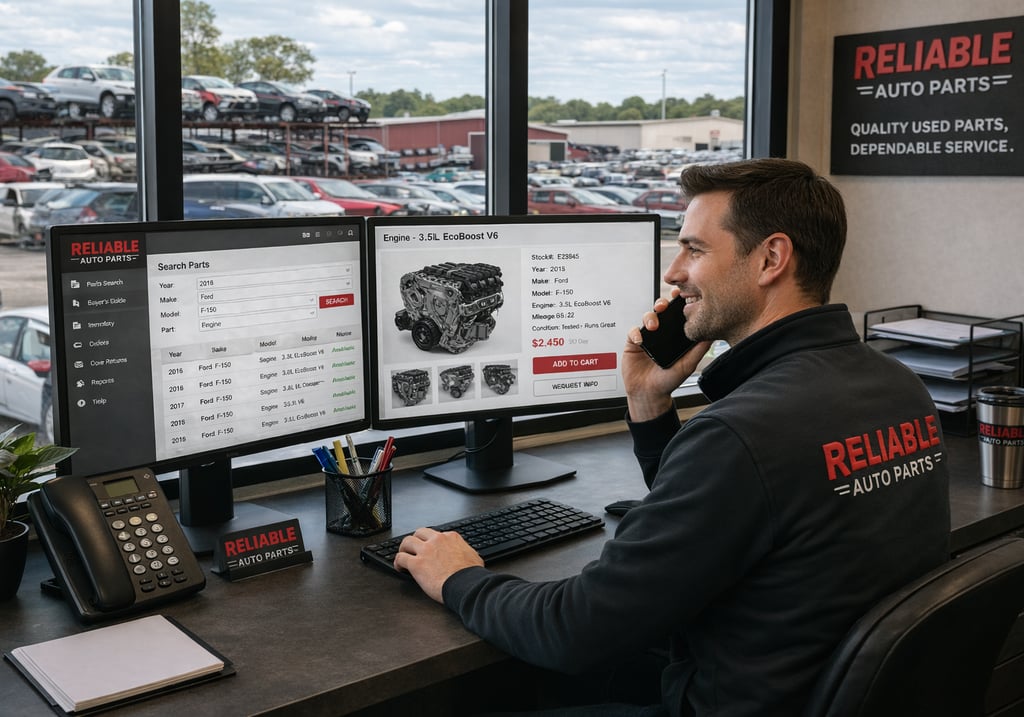
Finding used auto parts in Charlotte, NC, can be a practical way to repair your vehicle without overspending. Whether you drive an older pickup, a daily commuter car, a family SUV, or a work van, auto repairs can get expensive fast. One failed transmission, a damaged bumper, a cracked headlight, or a worn-out engine part can turn a normal week into a stressful one.
That is where used auto parts can help. Instead of paying full price for a brand-new replacement part, many Charlotte drivers look for quality used OEM parts that came from another vehicle. These parts may be original factory parts, and in many cases, they can fit better than cheaper aftermarket options.
Charlotte is a busy driving city. Between I-77, I-85, I-485, Independence Boulevard, South Boulevard, and the daily traffic around Uptown, University City, Ballantyne, NoDa, and the surrounding areas, vehicles experience significant wear and tear. Accidents happen. Parts fail. Cars age. But that does not always mean you need to buy everything new.
Used parts can be a smart middle ground. They are not the answer for every repair, but for many situations, they offer real value.
Why Charlotte Drivers Shop for Used Auto Parts
Many people start searching for used auto parts in Charlotte, NC, after getting a repair estimate that feels too high. Maybe the mechanic says a new part costs hundreds or even thousands of dollars. Maybe the dealership's repair price feels unreasonable. Or maybe the vehicle is older, and installing brand-new parts does not make financial sense.
That is a common situation. If a car is worth $5,000, spending $3,000 on new parts can feel like trying to remodel the kitchen in a house you are about to sell. Sometimes it makes sense. Sometimes it does not.
Used auto parts give drivers more options.
New parts can be expensive
New auto parts often cost more because they are newly manufactured, packaged, distributed, and sold through parts suppliers, dealerships, or repair networks. That price can make sense for certain safety-related or wear-and-tear parts, but it may be overkill for others.
For example, if you need a replacement door, mirror, wheel, radio, seat, taillight, or bumper cover, a good used part may solve the problem at a lower cost. The goal is not to be cheap. The goal is to be smart with the repair.
Used OEM parts often fit better than cheap aftermarket parts
OEM stands for Original Equipment Manufacturer. That means the part was made for the vehicle by the original manufacturer or supplier. A used OEM fender from the same model may line up better than a low-cost aftermarket fender. A factory headlight may fit more cleanly than a generic replacement. A used factory wheel may match the other three wheels already on your vehicle.
That is one reason many body shops, mechanics, and do-it-yourself vehicle owners consider used OEM parts. They can offer factory fit without factory-new pricing.
Older vehicles may need discontinued parts
If your vehicle is older, some parts may be harder to find new ones for. Automakers do not make every part forever. Over time, certain trim pieces, interior parts, body panels, modules, switches, and accessories become discontinued.
Used parts can keep older vehicles alive. If you are trying to fix an older Ford, Chevy, Toyota, Honda, Nissan, Jeep, Dodge, BMW, Mercedes-Benz, Hyundai, Kia, or Lexus, used parts may be the easiest way to find what you need.
What Are Used Auto Parts?
Used auto parts are parts removed from another vehicle and sold for reuse. These parts may come from salvage yards, dismantlers, insurance-totaled vehicles, trade-ins, auction vehicles, or cars that were taken apart because one major repair was not worth fixing.
Not all used parts are equal. Some are excellent. Some are worn out. Some are clean and tested. Others are risky. That is why knowing what you are buying matters.
OEM used auto parts
OEM used auto parts are original factory parts removed from a vehicle. These are often desirable because they were made to fit that exact vehicle line. For body panels, lights, seats, wheels, mirrors, and trim, OEM parts can be especially helpful.
If you want the replacement part to look and fit like the original, used OEM is often worth considering.
Salvage yard parts
Salvage yard parts come from vehicles that are no longer being driven. The vehicle may have been wrecked, totaled, abandoned, retired, or sold for parts. A salvage yard may remove valuable parts and sell them to repair shops, mechanics, and individual buyers.
Some salvage yards allow customers to pull their own parts. Others remove the parts for you. Some also sell online and ship parts across the country.
Recycled automotive parts
The term recycled auto parts is another way to describe used parts. It sounds more professional because it highlights the industry's environmental side. Instead of throwing usable parts away, they are cleaned, inventoried, resold, and reused.
This helps reduce waste while giving vehicle owners more affordable repair options.
Remanufactured vs. used parts
A used part is normally sold as removed from another vehicle. A remanufactured part has been rebuilt or restored to meet certain standards. For example, alternators, starters, engines, transmissions, and steering racks may be remanufactured.
Remanufactured parts usually cost more than used parts, but they may include stronger warranties. Used parts may be cheaper, but the condition depends heavily on mileage, testing, seller reputation, and return policy.
Popular Used Auto Parts in Charlotte, NC
People in Charlotte, NC, search for many types of used car parts, but some categories are more common than others. These are the parts that often make sense to buy used, especially when the price difference between new and used is large.
Used engines
A used engine can be a major money saver when a vehicle’s original engine fails. If your engine has a blown head gasket, rod knock, severe oil consumption, timing failure, overheating damage, or low compression, a replacement may be more practical than a rebuild.
A used engine should be matched carefully. Engine size, VIN code, emissions equipment, sensors, and model year can matter. Even engines that look similar may have important differences.
Before buying, ask about mileage, compression testing (if available), warranty length, and which accessories are included. Some engines are sold only as long blocks. Others may include accessories like the alternator, intake, or wiring, but those extras are not always guaranteed.
Used transmissions
Transmission repairs can be expensive, especially on modern vehicles. A used transmission may help reduce the cost, but compatibility is critical. Automatic transmissions can vary by engine, drivetrain, computer programming, gear ratio, and production date.
If you are looking for a used transmission in Charlotte, make sure the transmission matches your vehicle exactly. Ask your mechanic to help confirm the interchange before you buy. A transmission error can cause a costly headache.
Used body parts
Used body parts are popular after accidents. These may include doors, hoods, fenders, trunk lids, tailgates, bumpers, quarter panels, mirrors, and grilles. If you can find the same color, you may save money on paint, although color match is never guaranteed because paint fades differently over time.
For collision repairs, used OEM body parts can be a strong option. They usually fit better than very cheap aftermarket panels and may cost less than new OEM parts.
Used headlights and taillights
Modern headlights can be surprisingly expensive. Some vehicles use LED, HID, adaptive lighting, or complex headlight assemblies that cost far more than older sealed-beam lights. A used headlight or taillight can be a practical replacement if the housing, tabs, lenses, and connectors are in good shape.
Always check photos closely. Broken mounting tabs, cloudy lenses, moisture inside the housing, or damaged plugs can turn a “good deal” into a bad buy.
Used wheels and rims
Used wheels are helpful when one rim is bent, cracked, damaged, or mismatched. Many drivers want a factory wheel that matches the others. Buying one new OEM wheel can be expensive, so used wheels are often a smart choice.
Check the wheel size, bolt pattern, width, offset, and style. Also, ask whether the wheel has been checked for bends or cracks.
Used interior parts
Interior parts can be hard to find new, especially for older vehicles. Used seats, consoles, dashboards, door panels, radios, climate controls, switches, visors, cup holders, and trim pieces may be the only realistic option.
Interior parts are also very specific. Color, trim level, seat material, wiring, and options can all affect fit. A black leather power seat from one trim may not match a gray cloth manual seat from another.
Used electrical parts
Used electrical parts can include engine control modules, body control modules, fuse boxes, sensors, radios, instrument clusters, switches, and wiring harnesses. These parts can save money, but they also require caution.
Some modules may need programming. Some may be locked to the original vehicle. Some may look identical but have different part numbers. Always confirm compatibility before buying used electronics.
Benefits of Buying Used Auto Parts in Charlotte
Used parts are not just about saving a few dollars. The right repair can make the difference between fixing a vehicle and giving up on it.
Save money on repairs
The biggest benefit is cost savings. Used parts can be much cheaper than new parts, especially for engines, transmissions, body panels, wheels, lights, mirrors, and interior pieces. If you are paying for labor, saving money on the part itself can help keep the entire repair within budget.
This matters for families, students, work truck owners, small business owners, delivery drivers, and anyone who depends on their vehicle every day.
Find OEM fit and quality
A used factory part may fit your vehicle better than a low-priced aftermarket replacement. This is especially true for exterior body parts and lights. Poorly fitting parts can create uneven gaps, water leaks, wind noise, or a repair that simply looks wrong.
Used OEM parts can help preserve the original look and feel of the vehicle.
Keep older cars on the road
Not every vehicle needs to be replaced just because one part fails. If the car is otherwise reliable, a used part may extend its life for years. That is especially helpful when car payments, insurance rates, and new vehicle prices are high.
Sometimes the smartest vehicle is the one you already own.
Support recycling and reduce waste
Buying used auto parts supports automotive recycling. Instead of being sent to scrap, usable parts get a second life. It is a practical form of recycling that helps reduce waste and makes repairs more affordable.
That is a win for drivers and the environment.
How to Choose the Right Used Auto Part
Buying used parts is not hard, but it does require careful matching. Vehicles are specific. One wrong digit in the part number can matter. One trim difference can change the fit.
Here is how to shop smarter.
Match the year, make, model, and trim
Start with the basics: year, make, model, trim, engine size, transmission type, and drivetrain. For example, a part for a 2017 Toyota Camry may not fit every 2017 Camry. Engine size and trim level may change the part.
The more details you have, the better.
Check the VIN when possible
Your VIN is like your vehicle’s fingerprint. It can help sellers and mechanics confirm the correct part. The VIN may reveal engine type, production details, and equipment options.
If you are buying a major part like an engine, transmission, control module, or differential, using the VIN is especially important.
Ask about mileage
Mileage matters for mechanical parts. A used engine with 58,000 miles is different from one with 185,000 miles. A transmission from a low-mileage vehicle may be worth more than one from a high-mileage car.
Mileage is not the only factor, but it is an important part of the decision.
Review photos carefully
Photos can tell you a lot. Look for cracks, rust, broken tabs, missing plugs, dents, scratches, corrosion, and signs of damage. If the listing only has one blurry photo, be careful.
For body parts, check edges and mounting points. For lights, check lenses and tabs. For wheels, check the lip and inside barrel. For interior parts, look for stains, tears, cracks, and broken clips.
Confirm return policies before buying
This is one of the most important steps. Used parts can be wrong, damaged, or incompatible. Before you buy, understand the return policy. Can you return it if it does not fit? Who pays shipping? Is there a restocking fee? Is there a warranty? How long do you have?
A cheap part with no return option can become expensive if it is wrong.
Used Auto Parts for Common Vehicle Repairs
Used parts can be helpful for many common repairs. The key is knowing when they make sense and when they do not.
Engine problems
If your engine has serious internal damage, a used engine may be more affordable than a rebuild. This is common with older vehicles that are still worth repairing. Used engines are often purchased by repair shops, DIY mechanics, and vehicle owners trying to avoid a huge dealership repair bill.
Still, engine replacement is a major job. Make sure the engine is compatible and comes from a reputable seller.
Transmission issues
Slipping, harsh shifting, delayed engagement, grinding, or no movement can point to transmission trouble. A used transmission may be worth considering if rebuilding is too expensive.
However, installation labor can be high, so you do not want to gamble on a questionable transmission. Buy from a seller who provides mileage, warranty details, and interchange information.
Collision repairs
Used parts are very common for collision repairs. If a Charlotte driver has damage from a minor accident, a parking-lot scrape, a deer impact, or a rear-end collision, used body panels and lights can reduce repair costs.
A used OEM bumper, hood, door, fender, or taillight may be a better value than buying a new one.
Electrical and lighting repairs
New electrical parts can be expensive, but used options may be available. Headlights, taillights, switches, control panels, radios, and modules are often sold used.
Use caution with electronic modules. Some require programming, and some may not work properly unless they match exactly.
Interior replacement parts
Interior parts are great candidates for used replacement. If your seat is torn, the console lid is broken, the radio is dead, the door panel is damaged, or a trim piece is missing, used parts may be the most practical choice.
This is especially true for older vehicles where new interior parts are no longer available.
Where Charlotte Drivers Can Look for Used Auto Parts
There are several ways to find used auto parts near Charlotte, NC. Each option has pros and cons.
Local salvage yards
Local salvage yards can be useful when you want to inspect a part in person or avoid long shipping times. Some yards have inventory systems, while others require phone calls or visits. If you need larger items such as doors, hoods, bumpers, engines, or transmissions, local pickup may save you money.
The downside is availability. A local yard may not have the exact vehicle you need. Charlotte is a large metro area, but specific parts can still be hard to find.
Online used parts marketplaces
Online marketplaces allow you to search beyond Charlotte. This can help when you need a specific part, a rare trim, an exact color, or a low-mileage component. Many sellers provide photos, part numbers, mileage, and shipping options.
The advantage is selection. The risk is that you cannot inspect the part in person before buying.
eBay Motors and national sellers
eBay Motors is a common place to search for used auto parts because there are many sellers, photos, compatibility tools, and buyer protections. You can often compare multiple listings, check seller feedback, and look for return options.
For many people, this is easier than calling several salvage yards one by one.
Local repair shops and mechanics
Some mechanics can help source used parts. This may be a good option if you are not comfortable matching parts yourself. A good repair shop may know which parts are safe to buy used and which ones should be new.
This can also reduce the risk of ordering the wrong part.
Tips Before Buying Used Car Parts Online
Buying online can work well, but you need to slow down and check the details. Used parts aren't like buying a shirt, where you can simply pick small, medium, or large. Vehicle parts need precision.
Compare part numbers
Whenever possible, compare the part number on your original part to the listing. This is especially important for modules, lights, switches, sensors, alternators, starters, radios, and trim pieces.
Part numbers can save you from expensive mistakes.
Look for seller ratings
A seller’s reputation matters. Look for sellers with strong feedback, clear photos, detailed descriptions, and reasonable communication. A professional seller will usually provide better information than someone who posts a vague listing with no details.
Good sellers make the process smoother.
Watch shipping costs
Large parts can be expensive to ship. Engines, transmissions, doors, hoods, bumpers, seats, and wheels may require freight shipping. Sometimes a part looks cheap until you add the shipping cost.
Always check the total delivered price, not just the part price.
Understand warranties
Used parts may come with limited warranties. A 30-day, 60-day, or 90-day warranty is common, but coverage varies. Some warranties cover replacement only. Some do not cover labor. Some require professional installation.
Read the warranty terms before buying, especially for expensive parts.
Avoid buying only on appearance
A part can look right and still be wrong. A transmission may look identical but have different internal gearing. A headlight may look the same but have a different plug. A mirror may fit the door but lack blind-spot monitoring.
Always match by vehicle details, options, and part numbers when possible.
Are Used Auto Parts Worth It?
Used auto parts are often worth it, but not always. The best decision depends on the part, the vehicle, the repair cost, and your risk tolerance.
When used parts make sense
Used parts often make sense for body panels, mirrors, lights, wheels, seats, trim, doors, hoods, tailgates, engines, transmissions, differentials, transfer cases, and many interior parts. These parts can be expensive new, and used OEM options may offer strong value.
Used parts are especially helpful when the vehicle is older, and the cost of new parts is hard to justify.
When new parts may be better
Some parts are better purchased new. Brake pads, rotors, belts, hoses, filters, spark plugs, fluids, gaskets, seals, bearings, and many suspension wear items are usually better new. These parts wear down over time and are often not worth buying used.
For safety and reliability, do not buy used parts just because they are cheaper. Sometimes, new is the right choice.
How to balance cost, quality, and risk
Think of used parts like buying a good used appliance. You can save money, but you still want to know where it came from, how much use it has, whether it was tested, and what happens if it does not work.
The best used part is not always the cheapest one. It is the one that fits, works, is fairly priced, and comes from a seller who stands behind it.
Used Auto Parts Charlotte, NC: Smart Shopping Checklist
Before you buy a used part, use this simple checklist:
1. Confirm your vehicle’s year, make, model, trim, engine, and drivetrain.
2. Get your VIN ready.
3. Compare part numbers if possible.
4. Ask about mileage for mechanical parts.
5. Review all photos closely.
6. Check for damage, rust, cracks, broken tabs, or missing plugs.
7. Ask whether the part was tested.
8. Confirm what is included with the part.
9. Review the warranty.
10. Understand the return policy.
11. Compare the total price with shipping.
12. Ask your mechanic before ordering major parts.
This small amount of preparation can save you a lot of frustration.
Conclusion
Shopping for used auto parts in Charlotte, NC, can be a smart way to repair your vehicle without paying full price for brand-new parts. Whether you need a used engine, transmission, headlight, door, mirror, wheel, bumper, seat, or interior component, used OEM parts can offer real value when chosen carefully.
The key is not to rush. Match the part correctly, check the details, compare photos, ask questions, and understand the return policy before buying. Used parts can help Charlotte drivers keep their vehicles running, reduce repair costs, and avoid replacing a car too soon.
For many repairs, a quality used part is not a shortcut. It is simply a practical choice.
FAQs About Used Auto Parts in Charlotte, NC
Are used auto parts reliable?
Used auto parts can be reliable when they are properly matched, inspected, and purchased from a reputable seller. Mechanical parts like engines and transmissions should be checked for mileage, test results, warranty status, and compatibility. Body parts, lights, wheels, and interior parts are often easier to evaluate from photos and condition reports.
Is it better to buy used OEM parts or new aftermarket parts?
It depends on the part. Used OEM parts may fit better because the original manufacturer made them for the vehicle. New aftermarket parts may be a good choice for some repairs, but lower-cost aftermarket parts can sometimes have fitment or quality issues. For body panels, lights, mirrors, wheels, and trim, used OEM parts are often worth considering.
What used auto parts should I avoid buying?
It is usually better to buy new items of clothing. This includes brake pads, belts, hoses, filters, fluids, spark plugs, gaskets, seals, and many suspension wear parts. These parts are designed to wear out, so buying them used usually does not make sense.
Can I buy a used engine or transmission for my vehicle?
Yes, but you need to be careful. Used engines and transmissions must be compatible with your vehicle. Check the VIN, engine size, transmission type, production details, mileage, and warranty. It is also smart to have your mechanic confirm compatibility. Before you make a purchase, consider checking the vehicle's history to ensure its reliability.
Where can I find used Parts near Charlotte, NC?
Charlotte drivers can look at local salvage yards, auto recyclers, online used parts marketplaces, eBay Motors, and repair shops that source used parts. Local yards may be helpful for pickup, while online sellers can offer a wider selection if you need a specific part.
Parts Request & Contact Form
Looking for a specific used auto part or need to get in touch with our team? Fill out the form below, and we’ll help you find the right part or answer your questions as quickly as possible.
Copyright © 2026 | Reliable Auto Parts | All Rights Reserved
Reliable Used Auto Parts is built on the belief that finding quality replacement parts should be simple, practical, and straightforward. From engines and transmissions to body parts, lighting, wheels, and interior components, we aim to be a trusted resource for drivers, repair shops, and vehicle owners seeking dependable used auto parts for a wide range of repair needs.
Subscribe to our Newsletter